Girl Trouble were the band that bridged the gap between the Pacific Northwest sound of the '60s (the high-energy garage rock attack of
the Sonics,
the Wailers, and
Paul Revere & the Raiders)
and the grunge scene of the '80s and '90s, playing wild rock & roll
that was influenced by the past but embraced the snot, energy, and
attitude of punk and its offshoots.
Girl Trouble were formed in 1983 by three friends from Tacoma, Washington -- drummer
Bon Von Wheelie (real name
Bon Henderson), guitarist
Kahuna (aka
Bill Henderson,
Bon's brother), and bassist
Dale Philips. When
Kurt P. Kendall, born in Spokane but a then recent transplant to Tacoma, teamed up with
Bon,
Kahuna, and
Dale on vocals and saxophone,
Girl Trouble
were born, and after jamming at a few parties, the band made its proper
debut March 9, 1984 at a Battle of the Bands at Fort Steilacoom
Community College. To their relief,
Girl Trouble's set earned them second place, since first place would have meant they'd have to play another 45 minutes.
Girl Trouble
became a presence on the Pacific Northwest scene, known for their tough
but high-spirited sound as well as their insistence on giving their
fans a show -- featuring go-go dancers on-stage, giving out prizes,
staging themed shows, anything to add a new element of fun and
excitement to their gigs. In 1987, the band made its recording debut,
cutting a single for Olympia's K Records, "Riverbed" b/w "She No Rattle
My Cage." A second 7" for K, "Old Time Religion" b/w "Tarantula,"
followed a few months later, and in 1988 they went into the studio with
producer
Steve Fisk and cut a full-length album in a weekend,
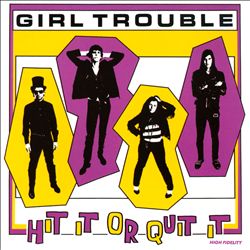
Hit It or Quit It. The LP was the first album released by an ambitious Seattle indie label called Sub Pop Records, and
Fisk would become a valued ally of
Girl Trouble, producing several of their future releases and occasionally playing keyboards with them in the studio and on-stage.
Girl Trouble's
third single, "When Opposites Attract" b/w "Gospel Zone"/"Homework,"
was also the debut release from their own label, Wig Out Records, an
offshoot of the band's own fanzine.
In 1990, the band paid homage to its influences in
the Pacific Northwest scene of the '60s with the EP Stomp and Shout and
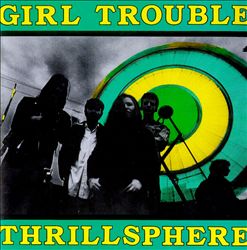
Work It on Out, while a second album,
Thrillsphere,
was issued by PopLlama Records by the end of the year. By this time,
the band was touring frequently, sharing stages with like-minded acts
such as
the Mono Men,
Crackerbash,
Beat Happening,
Phono-Comb, and
the Woggles. In 1992,
Girl Trouble released a project close to their hearts, an EP of theme songs from four of their favorite
Elvis Presley movies, and the following year the band unleashed its third album,
New American Shame, a title that would be borrowed as the name of a Seattle-based rock outfit. (
Bon in turn borrowed the phrase from an old scandal sheet.)
Girl Trouble toured extensively in the United States, Canada, and Europe in support of
New American Shame, and released an EP of highlights from a gig in Chicago. In 1996,
Girl Trouble appeared in the documentary Hype!, about the Pacific Northwest rock scene, and album number four,
Tuesdays, Thursdays, and Sundays, dropped in 1998, but as the demands of real life began to intrude,
Girl Trouble
pulled back on their schedule, never breaking up but touring less and
staying out of the recording studio except to cut occasional compilation
appearances.
However,
Girl Trouble
continued to play memorable shows in the Northwest, and in 2008, when
Sub Pop Records staged a 20th anniversary festival in Seattle and
Girl Trouble
were left off the bill, the band responded by playing a brief acoustic
set in the same park where the big show took place. In 2013,
Girl Trouble celebrated the 25th anniversary of the release of
Hit It or Quit It
by reissuing the album through K Records, playing a handful of special
shows in the Seattle area to mark the occasion. In addition to
maintaining the
Girl Trouble website,
Bon Von Wheelie
also hosts neverpaytoplay.com, a website offering information to
musicians on the many downsides of "pay to play" arrangements and the
promoters who employ such schemes to book shows.