20 March 2022

ASTROPUPPEES Pet 1999


Discogs


Artist Biography

by Heather Phares

L.A.'s astroPuppees began as the basement project of singer/songwriter/guitarist Kelley Ryan. Playing the songs she wrote and recorded downstairs led to collaborations with her friends, including songwriter Steve Toland. The duo wrote "It's Not Christmas," which they sent to the Shoes; the song ended up on a Christmas compilation from Black Vinyl Records, the group's label. Ryan went back to the basement and recorded some more songs with her friends, including bassist/vocalist Maureen Serrao and drummer Dan McCarroll.

After Serrao went to culinary school and McCarroll went on tour with a band, the astroPuppees were put on hold for a time. Ryan went to Ireland and also studied cooking, while still writing songs and playing guitar in Irish pubs. On her return, Ryan met with another of her friends, singer/songwriter/producer Don Dixon; he mixed some of her new songs. Serrao rejoined the band and Ryan sent tapes of the mixes off to some of her friends; a copy of the tape made its way to Hightone Records, who offered the astroPuppees a deal. In 1996, they released the group's debut album, You Win the Bride, while 1999 saw the release of Pet, which featured guest performances by Marshall Crenshaw and Don Dixon. Released in 2002, Little Chick Tsunami marked the band's first album for Manatee, Kelley Ryan's own imprint. Sugar Beat found a more mature, streamlined set of songs from astroPuppees upon its 2005 release date.

Tracklist

1
15 Seconds
2
Angelica
3
Woo Hoo Hoo
4
Like A Suitcase
5
Shaken Free
6
Wanna Be Alone
7
Galaxy
8
Crowded Town
9
Olive 5
10
It's Alright
11
Any Other Day
12
Speed Walking College Girls
13
Sleep


19 March 2022

GOOD HORSEY Kazué 1994


Discogs


Kazue Review

by Francis Arres

Good Horsey's Kazue, the band's debut and only release, is a mid-'90s treasure shared by a few who never forgot it. A stigma that followed many bands in the mid-'90s was the inevitable comparison to Pavement and the use of "jangly guitars." The term "jangly guitars" is fairly applied here, but Good Horsey pushes a step further. The trio is comprised of Justice Schoenfarber, Mark Szabo (previously of Infernal Devices and currently of Capozzi Park), and Max Lee, each on a wide variety of instruments (including electric guitars, bass, drums, organ, ukulele, violin, xylophone, tapes, pie pan, party favors, and scrap metal) in addition to vocals. Good Horsey offers its pop sensibilities with surprises waiting at every corner. Guitar parts ebb and flow hauntingly, then take a noisy turn. Basslines build melodies that follow and add to the vocal parts. The drums stay the course on the main parts and help navigate the chaos. The presentation and the lyrics and titles are mysterious, causing the listener to hang on each word. A tune like "But She Knew" makes the listener wonder if this is a spy story or a tale about the successes and failures of the head of a family. The frustration of the characters peaks with the screeching noises offered by the instruments complementing the lyrics. "All My Accessories Are a Reflection of My Perky Inner Spirit," one of three instrumentals on the record, is non-distorted rock with one surprise that delves into remedial math. The end of the song takes the listener back to the straight-ahead pop that comprises most of the record. "Burn Up the Sun" is the perfect book end to "Like the Cute One"'s beginning. The lyric line is a mantra that has you humming and singing after the epic ending concludes. A couple of tunes on the records may stray into background music, a feature that debuts tend to exhibit due to length. Weeding through these tunes is definitely worth it to get to the gems of Good Horsey's Kazue. 

 
Tracklist

1. Like The Cute One
2. How Oswald Bastable Ruined My Life
3. Ascending The Plateau Divine
4. Settle Down
5. Barely Walking
6. But She Knew
7. All My Accessories Are A Reflection Of My Perky Inner Spirit
8. Summer Replacement
9. Anna (Wash Your Hands)
10. Rainy
11. Delighted
12a Burn Up The Sun
12b [silence]
12c  [Untitled]


18 March 2022

VIRGOS MERLOT Signs of a Vacant Soul 1999

by request


Discogs 


Alice In Chains, anyone?

Artist Biography

by Roxanne Blanford
With a name that conjures images of purity and smooth blends, Birmingham, Alabama's Virgos Merlot was not always the smartly attired, reptilian contact lensed group they appeared to be in 1998, the year they first toured with such notable alt-rock bands as Fuel) and Eve 6. Singer/lyricist Brett Hestla, guitarist Jason Marchant, who had known oneanother since high school, and drummer JD Charlton all played together in a band named Wanton Rut. When that band later became the Devine, guitarist Ted "Deacon" Ledbetter joined. Hestla and Marchant worked in a cabinet shop at the time, with Marchant later becoming a licensed paramedic. As the Devine, they released one CD, Victim, but broke up shortly after. So determined were they to break out of the everday life of normal jobs, Hestla, Marchant, Charlton, Ledbetter and Ledbetter's childhood friend, bass player and nursing student Chris Dickerson formed Virgos Merlot. On the basis of demo recordings made in the basement studio of friend and producer Jason Elgin as well as a showcase performance at Orlando, Florida's House of Blues in March 1998, Virgos Merlot were signed to Atlantic Records by A&R king Steve Robertson -- a mere 18 months after forming the band. Their major label debut, Signs of a Vacant Soul was officially released in March, 1999 as the entire band made preparations to relocate to Orlando, Florida.


Tracklist

1
Cycle3:24
2
Come Apart3:51
3
Winning3:40
4
Gain4:19
5
Wrong3:06
6
Beautiful Lie4:59
7
More2:29
8
Knowing Burns3:41
9
Kiss My Disease4:32
10
Trouble3:33
11
Parasite4:19
12
Disregarding3:45

16 March 2022

THE SAMPLES No Room 1992


Discogs


Artist Biography

by Stephen Thomas Erlewine

With their relaxed, slightly jazzy pop, the Samples were one of the most popular touring bands of the early '90s. After a bad experience with a major label, the band began releasing their own records independently, building support through a grassroots network of fans. Through constant touring, the Samples were able to keep building their network of fans. They were also busy in the studio, recording three albums between 1992 and 1993. With none of their albums deviating from their folky, Sting-meets-the Grateful Dead pop, their albums -- which include 1994's Autopilot, 1996's Outpost, and 1997's Transmissions from the Sea of Tranquility live set -- are virtually indistinguishable from each other. However, none of them are bad; each record has a couple of first-rate songs, showing why they are concert favorites across the country. Here and Somewhere Else followed in 1998 and Sparta was issued in fall 2000. Return to Earth appeared in 2001, and this studio effort included a guest spot from Boyd Tinsley of the Dave Matthews Band on the track "Great Blue Ocean." The three-disc Anthology in Motion, Vol. 1 arrived in 2002, followed by 2003's Seventeen, a stripped-down live set performed before a thankful crowd at Connecticut's Quinnipiac College. The band returned to the studio for 2004's Black & White and 2005's Rehearsing for Life. 


Tracklist

1. When It's Raining
2. Summertime
3. Another Disaster
4. Did You Ever Look So Nice
5. Nothing Lasts For Long
6. Stone Tears
7. Giants
8. Suburbia
9. 14th And Euclid
10. Won't Be Back Again
11. Pain
12. Little Whale
13. Seany Boy (Drop Out)
14. Taking Us Home

THE HILLTOPS Big Black River 1991


Discogs 


Artist Biography

by Rob Caldwell

Based in Oxford, MS, the Hilltops served as a precursor to the band Blue Mountain and the later music career of John Stirratt (Wilco, Uncle Tupelo, the Autumn Defense). One of the best and most popular bands in the North Mississippi/Memphis region during their late-'80s existence, they successfully mixed country and roots rock with punk -- imagine the Replacements if they had come from Dixie. The disparate yet harmonious elements in the music were best shown by Stirratt's tendency towards the punkier side of things, while co-leader Cary Hudson's songs were more earthy and had a more overt country influence (though were no less rocking). They released Holler on cassette in 1989 and Big Black River on CD two years later (which would eventually be re-released by Hudson's cousin's label Black Dog Records). After the band's end, Hudson and guitarist Laurie Stirratt (sister of John), by now married, moved to Los Angeles where they formed Blue Mountain before moving back to Mississippi. John Stirratt recorded an album's worth of tracks which would later be released as the Gimmecaps and joined Uncle Tupelo and then Wilco. 


Tracklist

1
Breakdown
2
Sidewalk
3
Strange Love
4
I'd Like To See You
5
Dead End Street
6
Big Black River
7
Old House
8
Broke Down & Busted
9
Slow Suicide
10
900 Miles
11
I Might Be The Last One
12
Judgement Day
13
Walk A Mile
14
Seafoam Green
15
One More Time
16
Blue


DOO RAG Chuncked And Muddled 1994


Discogs


Wikipedia

Doo Rag was an American lo-fi blues band duo from Tucson, Arizona, United States. The band consisted of Bob Log III and Thermos Malling. By the time of their breakup, they had supported a number of artists on tour, most notably Sonic Youth and Beck.


Tracklist

1
Train I Ride2:36
2
Can't Be Satisfied2:58
3
Black Mini2:14
4
John Henry3:02
5
Old Car3:11
6
Chunked And Muddled2:35
7
Curly Hair4:05
8
White Lightning3:09
9
Shake'em On Down3:09
10
Bull Dog3:18
11
Won't Be Bad No More3:17
12
Drop Down Baby2:18
13
Bullhorn2:20
14
Backyard2:13
15
Hogtied (Live On Radio)2:01
16
Chuncked And Muddled (Live On Radio)2:26
17
Drop Down Baby (Live On Radio)2:24
18
Hussie Bowler (Live On Radio)2:34


COWBOY JUNKIES Essential Junk 1994


Discogs


Artist Biography

by Steve Huey

One of the most unique and enduring bands in alternative rock, Cowboy Junkies embodied a sound that had its roots in traditional folk, blues, and country music but was performed with a placid, languid pace that belied the slow-burning passion of their performances. The honey-infused, ethereal whisper of lead singer Margo Timmins was matched by the spare but thoughtful accompaniment of guitarist Michael Timmins, bassist Alan Anton, and drummer Peter Timmins, and their most successful recordings played heavily on that dynamic, documented in a naturalistic and unobtrusive manner. Cowboy Junkies experienced an international breakthrough with 1988's The Trinity Sessions, featuring their hit cover of Lou Reed's "Sweet Jane," and their daring earned them an audience in alternative rock circles, while their embrace of a low-volume traditionalism would pave the way for the Americana movement and earned them the approval of noted singer/songwriters such as Guy Clark, Jimmie Dale Gilmore, John Prine, Townes Van Zandt, and Butch Hancock. The Trinity Sessions and 1990's The Caution Horses epitomized their trademark sound, and 1996's Lay It Down found them adding rock guitars to their formula. 1998's Miles from Our Home embraced a more polished production style without spoiling their formula, and their steady stream of albums released in the 2000s and 2010s (in particular 2006's Long Journey Home and 2018's All That Reckoning) were the work of a group working the boundaries of their style while finding new wrinkles in the music. The four-part Nomad Series issued between 2010 and 2012 saw them giving themselves permission to explore unexpected directions.

Cowboy Junkies were founded by guitarist/songwriter Michael Timmins and bassist Alan Anton (born Alan Alizojvodic), who first played together in a Toronto-based band called the Hunger Project in 1979. They later moved to the U.K. and played with an avant-garde instrumental outfit called Germinal, but eventually grew weary of the group's style and returned to Toronto in 1984. They started jamming with Timmins' brother Peter on drums, and in 1985 they recruited a vocalist in sister Margo, at the time a social worker who'd never sung publicly before. Dubbing themselves Cowboy Junkies simply because the name had a ring to it, they formed their own independent label, Latent, and released their debut album, Whites Off Earth Now!!, in 1986. Featuring only one original song, the album was recorded using only one microphone, and although it was initially available only in Canada, it helped them land a major-label deal with RCA. Their first widespread release was 1988's The Trinity Session, which was recorded inside Toronto's Church of the Holy Trinity in the span of one night -- again using only one microphone. The Trinity Session became a cult hit, earning rave reviews from critics and substantial college radio airplay for tracks like "Misguided Angel" and their cover of "Sweet Jane."

Now an underground sensation, Cowboy Junkies decided to concentrate more on Michael Timmins' original material for the bigger-budget follow-up, 1989's The Caution Horses. The album didn't cause quite as much of a stir, although it helped maintain their cult fan base. Released in 1992, the even more countrified Black Eyed Man found Timmins settling more comfortably into his songwriting voice, which set the stage for 1993's Pale Sun, Crescent Moon. Hailed as their finest effort since The Trinity Session, the record bore more influence from rock and blues, and returned the Junkies to critics' darling status. However, it also proved to be their final album of new material for RCA. As the band left for Geffen, RCA issued the two-disc live compilation 200 More Miles and the best-of Studio. Meanwhile, the Junkies debuted for Geffen in 1996 with Lay It Down, a relatively high-volume effort compared to their shimmering early work.

Following 1998's Miles from Our Home, Cowboy Junkies parted ways with Geffen and revived their own Latent label. Their first release was the 2000 live album Waltz Across America, which was initially available only through the band's website. They followed it a year later with an album of all-new material, Open. One Soul Now followed in 2004. In 2005, the group released Early 21st Century Blues, a collection of covers -- and two originals -- that dealt with "war, violence, fear, greed, ignorance and loss." Recorded in just five days, it harked back to The Trinity Session. Later that year, the band were featured on the Beatles tribute album This Bird Has Flown, which was produced by Jim Sampas and featured various artists including the Donnas and Dar Williams.

Meanwhile, the band were busy collaborating with visual artist Enrique Martinez Celaya on a commemorative art book. Released in 2006, Cowboy Junkies XX was a retrospective piece intended to celebrate the band's 20th anniversary. It featured original watercolors by Celaya, handwritten song lyrics, and photographs gathered from the bandmembers' personal collections. In 2006, the group signed a deal with the Rounder-distributed Zoe Records, which issued 2006's Long Journey Home and 2007's At the End of Paths Taken, as well as another 2007 release, Trinity Revisited, in which they returned to Toronto's Church of the Holy Trinity to re-record the material from The Trinity Session, this time with guest artists Natalie Merchant, Vic Chesnutt, and Ryan Adams.

The band's next major project was an ambitious cycle of recordings they called the Nomad Series, an 18-month cycle that aimed to produce four albums built around common (but separate) narratives. Renmin Park: The Nomad Series, Vol. 1 was released in 2010. Following closely on its heels was 2011's Demons: The Nomad Series, Vol. 2, a covers album featuring songs originally written by the late Vic Chesnutt, the group's longtime friend and occasional tourmate. The third volume, Sing in My Meadow, released later in 2011, featured a live, garage rock sound, while the fourth, The Wilderness, which appeared early in 2012, featured new songs and completed the ambitious Nomad Series project. A box set featuring all four Nomad Series albums, plus a disc of extras, also came out that year. In 2013, the band presented a recording of Toronto poet Scott Garbe's The Kennedy Suite, a song cycle centered on the 1963 assassination of U.S. President John F. Kennedy. While only one song on the set is fully credited to Cowboy Junkies proper, the group's various members participated throughout and Michael Timmins is listed as co-producer.

In August 2015, Timmins announced another box set. Notes Falling Slow included remastered versions of three albums recorded during the first decade of the 21st century: Open, One Soul Now, and At the End of Paths Taken. It also featured a fourth disc of new recordings consisting of songs written for these three albums that were left unfinished until this project was assembled. The box was issued at the end of October 2015. Three years later, the band returned with All That Reckoning in July 2018, their first album of new material in six years. While Cowboy Junkies were touring following All That Reckoning's release, Barbara Timmins -- the mother of Michael, Margo, and Peter -- died, and as the siblings dealt with the grief and anxiety that came with her passing, they began writing material that reflected their emotional struggles. Originally planned to be released as bonus material accompanying a vinyl reissue of All That Reckoning, Ghosts was given a stand-alone digital release in April 2020.


Tracklist

1
Misguided Angel
2
Murder, Tonight, In The Trailer Park
3
Sun Comes Up, It's Tuesday Morning
4
Anniversary Song
5
Shining Moon
6
Southern Rain
7
If You Were The Woman And I Was The Man
8
Sweet Jane
9
'Cause Cheap Is How I Feel
10
Hard To Explain
11
Blue Moon Revisited
12
The Post


15 March 2022

BILLY BRAGG The Peel Session Album 1991


Discogs


Artist Biography

by Stephen Thomas Erlewine

Finding inspiration in the righteous anger of punk rock and the socially conscious folk tradition of Woody Guthrie and Bob Dylan, Billy Bragg was the leading figure of the anti-folk movement of the '80s. For most of the decade, Bragg bashed out songs solo with his electric guitar, singing about politics and love. While his lyrics were bitingly intelligent, they were also warm and humane, and he wrote melodies just as strong and memorable. Bragg's trailblazing early releases are collected on 1987's Back to Basics; 1991's Don't Try This at Home was a successful effort to balance politics and pop; 1998's Mermaid Avenue saw Bragg teaming with Wilco to set unheard Woody Guthrie lyrics to music; 2008's Mr. Love & Justice reflected a greater maturity without compromising his vision, and 2021's The Million Things That Never Happened was a country-influenced paean to resilience in hard times.

Billy Bragg began performing in the late '70s with the punk group Riff Raff, which lasted only a few months. He then joined the British Army, yet he quickly bought himself out of his sojourn with £175. After leaving the Army, he began working at a record store; while he was working, he was writing songs that were firmly in the folk and punk protest tradition. Bragg began a British tour, playing whenever he had the chance to perform. Frequently he would open for bands with only a moment's notice. Soon, he had built a sizable following, as evidenced by his first EP, Life's a Riot with Spy vs. Spy (1983), hitting number 30 on the U.K. independent charts. Brewing Up with Billy Bragg (1984), his first full-length album, climbed to number 16 in the charts.

During 1984, Bragg became a minor celebrity in Britain, as he appeared at leftist political rallies, strikes, and benefits across the country; he also helped form the "Red Wedge," a socialist musicians' collective that also featured Paul Weller. In 1985, Kirsty MacColl took one of his songs, "New England," to number seven on the British singles chart. Featuring some subtle instrumental additions of piano and horns, 1986's Talking with the Taxman About Poetry reached the U.K. Top Ten. Bragg's version of the Beatles' "She's Leaving Home," taken from the Sgt. Pepper Knew My Father tribute album, became his only number one single in 1988 -- as the double A-side with Wet Wet Wet's "With a Little Help from My Friends." That year, he also released the EP Help Save the Youth of America and the full-length Workers Playtime, which was produced by Joe Boyd (Fairport Convention, Nick Drake, R.E.M.). Boyd helped expand Bragg's sound, as the singer recorded with a full band for the first time. The following year, Bragg restarted the Utility record label as a way of featuring non-commercial new artists. The Internationale, released in 1990, was a collection of left-wing anthems, including a handful of Bragg originals. On 1991's Don't Try This at Home, he again worked with a full band, recording his most pop-oriented and accessible set of songs; the album featured the hit single "Sexuality." Bragg took several years off after Don't Try This at Home to concentrate on fatherhood. He returned in 1996 with William Bloke.

In 1998, he teamed with the American alternative country band Wilco to record Mermaid Avenue, a collection of performances based on unreleased songs originally written by Woody Guthrie. Reaching to the Converted, a collection of rarities, followed a year later, and in mid-2000 Bragg and Wilco reunited for a second Mermaid Avenue set. While touring in support of Mermaid Avenue, Vol. 2, Bragg formed the Blokes in 1999 with Small Faces keyboardist Ian McLagan. Lu Edmonds (guitar), Ben Mandelson (lap steel guitar), Martyn Barker (drums), and Simon Edwards (bass) solidified the group while Bragg moved from London to rural Dorset in early 2001. One year later, the Blokes joined Bragg for England, Half English, his first solo effort since William Bloke.

In 2004, Bragg collaborated with Less Than Jake for "The Brightest Bulb Has Burned Out," a track included on the Rock Against Bush, Vol. 1 compilation. The two-CD Must I Paint You a Picture? The Essential Billy Bragg appeared in 2003 with initial copies featuring a third bonus CD of collectibles and rarities. The Yep Roc label released the box set Volume 1 in 2006. The set included seven CDs and two DVDs of previously unavailable live footage, and the label simultaneously reissued four titles from Bragg's early back catalog in expanded editions. Billy Bragg spent the next year recording in London, Devon, and Lincolnshire, and 2008 saw the release of Mr. Love & Justice, his first solo effort in six years. Although the Blokes served as Bragg's backing band on the album, a limited-edition package also included a second disc comprised of intimate solo recordings. The bare-bones Woody Guthrie-inspired Tooth & Nail arrived in early 2013 and the following year brought the DVD & CD set, Live at the Union Chapel, which included an encore performance of Life's a Riot with Spy vs. Spy in its entirety as a bonus feature.

In the spring of 2016, Bragg teamed up with American singer, songwriter, and producer Joe Henry to make an album of folk songs inspired by the legacy of the American railroad system. Recorded with a portable recording rig while Bragg and Henry rode an Amtrak line from Chicago to Los Angeles, Shine a Light: Field Recordings from the Great American Railroad was released in September 2016, and followed by a joint concert tour. In November 2017, in the wake of the political upheavals brought on by Brexit in the U.K. and the election of Donald Trump in the United States, Bragg released a six-song EP of topical material, Bridges Not Walls.

In 2019, Bragg paid homage to his earlier work with The Best of Billy Bragg at the BBC 1983-2019, a compilation of BBC radio sessions with DJs from John Peel to David Jensen. To date the earliest known recordings of Bragg's best-known songs, the remastered BBC sessions captured what Bragg described as "the thrill of putting something out there for the very first time." 2019 also saw the publication of The Three Dimensions of Freedom, a 56-page paperback essay penned by Bragg on the themes of freedom of speech, accountability, and equality. Bragg intended to tour in 2020 and began recording a new album shortly thereafter, but the COVID-19 pandemic led to the tour and initial recording sessions being canceled. Instead, he passed along demos of his songs in progress to producers Romeo Stodart and Dave Izumi Lynch, who in turn created backing tracks for the tunes, with Bragg later adding guitar and vocals. The finished album, The Million Things That Never Happened, was released in October 2021.

 
Tracklist

1
Lovers Town3:48
2
Between The Wars2:39
3
Which Side Are You On?2:28
4
A Lover Sings4:04
5
Days Like These1:54
6
The Marriage2:02
7
Jeanne2:29
8
Greetings To The New Brunette3:19
9
Chile Your Waters Run Red Through Soweto2:44
10
She's Got A New Spell2:42
11
Valentine's Day Is Over4:26
12
The Short Answer4:25
13
Rotting On Remand3:20
14
A New England2:19
15
Strange Things Happen2:45
16
This Guitar Says Sorry2:33
17
Love Gets Dangerous2:19
18
Fear Is A Man's Best Friend2:41
19
A13, Trunk Road To The Sea2:23

SPACEHOG Cruel To Be Kind 1996


Discogs


Artist Biography

by Steve Huey

Spacehog mixed glam rock influences, including David Bowie and T. Rex, into their wall-of-distorted-guitars sound, a combination that helped the band make a modest dent in the late-'90s alternative rock scene. The quartet formed in New York City in 1993, following British drummer Jonny Cragg's move from Leeds to the Big Apple. He landed a job killing rats in the basement of an espresso bar, and although the work was less than desirable, he managed to meet guitarist (and fellow U.K. native) Antony Langdon at the shop. The two soon decided to visit topless bars and jam together. Langdon's brother Royston joined the group as a vocalist, and the musicians added guitarist Richard Steel to round out the lineup. Almost immediately after the lineup coalesced, Spacehog attracted the attention of Sire Records' president, Seymour Stein, and their debut album, Resident Alien, was released by the label in 1995. "In the Meantime" became the band's first hit, attracting audiences in several countries while becoming a number one rock single in America. Less than a year after Resident Alien's release, the album had sold over 500,000 copies, earning gold status. The Chinese Album followed in 1998, featuring a cameo appearance by Michael Stipe and an artier sound overall. Three years later, Spacehog (now sporting a new deal with Artemis Records) issued a third effort, entitled The Hogyssey. After joining the Black Crowes and Oasis on the road, the band split up, with several members going on to form the band Arckid.

 
Tracklist

1
Cruel To Be Kind (LP Version)3:04
2
The Horror (Previously Unreleased)4:49
3
Crack City (Recorded Live At Coney Island High, NYC)5:44
4
Starside (LP Version)3:48


14 March 2022

STAR 69 Eating February 1997


by request


Discogs


Artist Biography

by Stephen Thomas Erlewine

Led by vocalist/songwriter Julie Daniels, Star 69 is a mid-'90s alternative guitar-pop band. A native of Los Angeles, Daniels formed Star 69 in London. Over the course of 1996, the group released two independent singles and performed at the Reading Festival before signing with Radioactive Records. By the fall, they relocated to Los Angeles, where they recorded their debut album with producer Don Smith, who had previously worked with Cracker and John Hiatt. The resulting album, Eating February, was released early in 1997. 


Tracklist

1
You Are Here3:53
2
I'm Insane4:27
3
Burning Down The House4:04
4
Rotten Punch
4:56
5
I'm Selfish4:46
6
Lay Me4:30
7
Scabs2:52
8
Mama Don't Let4:16
9
Bruise3:47
10
I'm Not You4:15
69
You Don't Care4:02


11 March 2022

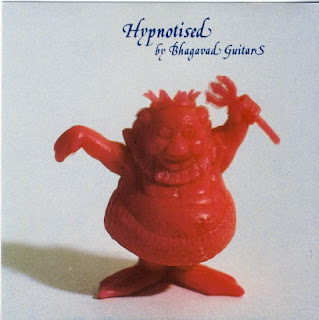
BHAGAVAD GUITARS Hypnotised 1992


by request


Discogs


Australian alternative pop 


Tracklist

 1. Hypnotise
 2. Accident
 3. Assassin
 4. River
 5. Song
 6. Hope
 7. Romeo Error
 8. Hard
 9. Leaving
10.  Plainly

10 March 2022

TRALUMA Seven Days Awake 1997


Discogs


Emo with hardcore elements on Caulfield Records label


Tracklist

1
Barn Burner
2
Gazi Gazi
3
Klondike Revolution
4
TK421
5
Dishes
6
Better Diesel
7
Don't Shoot The Messenger
8
Total Zero
9
Heads Up Seven Up
10
Low Like A Snake
11
Poco Loco
12
Chicago Defender
13
Montana Slim


STABBING WESTWARD Ungod 1994


by request


Discogs


Artist Biography

by Neil Z. Yeung

Part of the late-'90s mainstream industrial boom, American rock group Stabbing Westward wrapped their dour, angst-filled cries in appropriately dark and moody atmospherics, joining bands like Nine Inch Nails and Gravity Kills with a similarly corrosive style that would evolve into the early 2000s. Breaking into the mainstream with their sophomore LP, 1996's gold-certified Wither Blister Burn & Peel, they issued another gold album (1998's Darkest Days) before closing out their first era with the stylistic shift of 2001's fraught, pop-leaning Stabbing Westward. Disbanding in 2002, the group members split and pursued individual projects, most notably the Dreaming. After a nearly two-decade absence from the studio, the band regrouped and issued the comeback Dead and Gone EP at the start of 2020. In 2022, they released their fifth official full-length, Chasing Ghosts.


Tracklist

1. Lost
2. Control
3. Nothing
4. ACF
5. Lies
6. Ungod
7. Throw
8. Violent Mood Swings
9. Red And White
10. Can't Happen Here